Get in touch
We can provide further information about Play Learn Lead.
Find here the FAQ section about our project
This section provides further information on the Erasmus+ Play Learn Lead project, helping schools and partners to understand our educational activities.
The project brings together four partner organizations from four European countries:
- ASD Tirreno Sansa (Italy): Lead applicant and main project coordinator.
- Zespół Szkół Mistrzostwa Sportowego STAL w Rzeszowie (Poland): Secondary sports school providing educational and sports expertise.
- Akdeniz Koleji Spor Kulübü (Turkey): Sports club association focusing on youth training and practical sports experiences.
- CONIL CAMP SRL (Romania): Enterprise specializing in educational workshops, personal development, and digital inclusion.
The “Play, Learn, Lead” project aims to use football as an educational platform to foster transversal skills such as leadership, teamwork, and resilience and to promote social inclusion among young people. It integrates digital tools into school and sports environments to enhance the digital competences of both students and coaches, combining sports practice with theoretical learning.
The initiative develops several key digital educational tools:
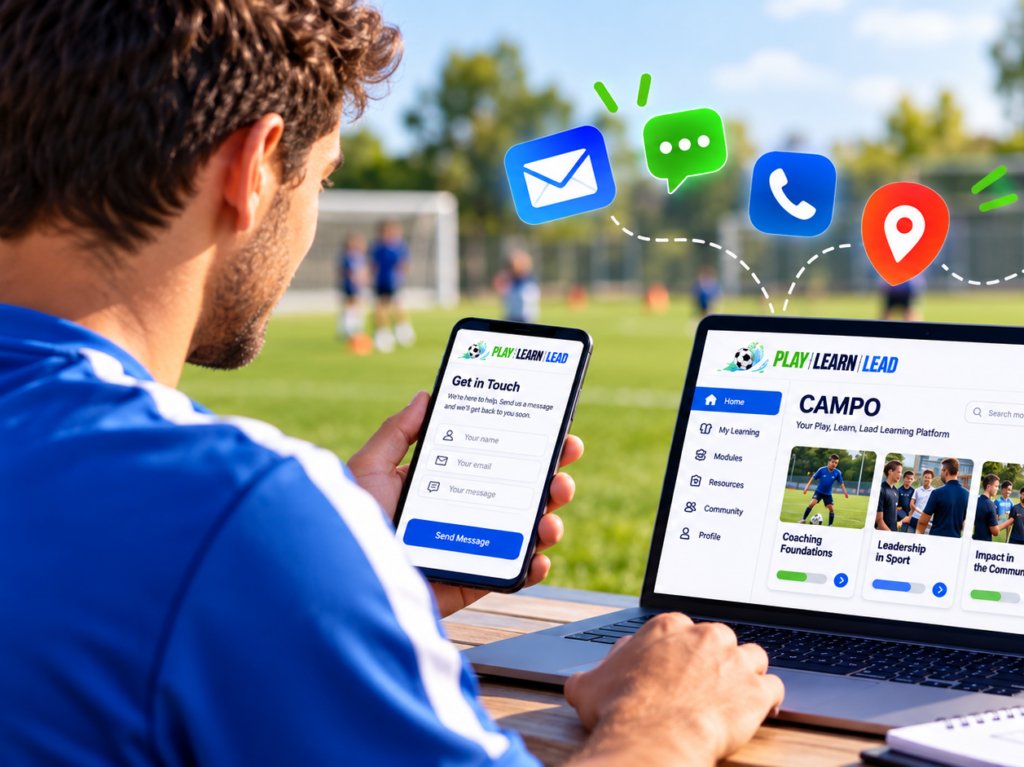
- The “Campo” Digital Training Platform: A central e-learning hub inspired by the “Classroom 3.0” concept, featuring user profiles, progress tracking, discussion forums, and gamification.
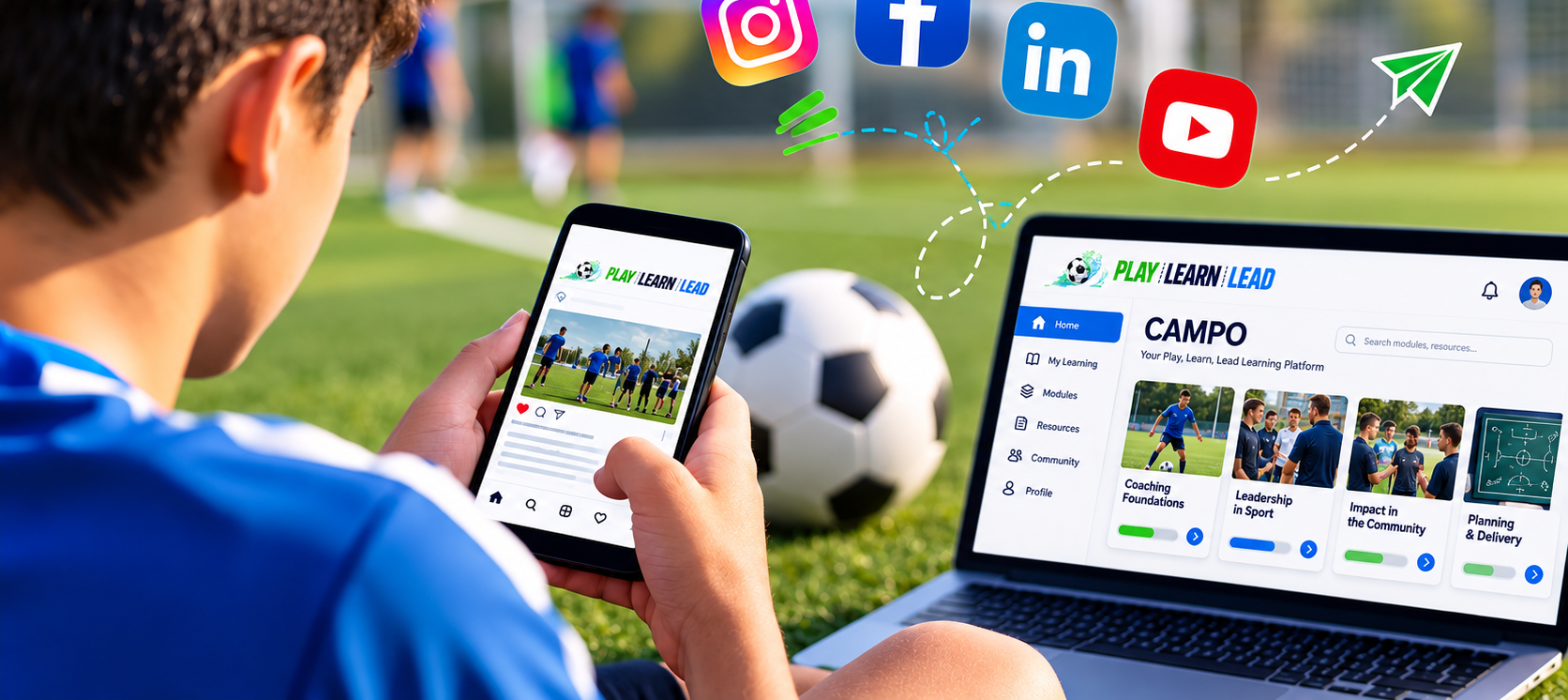
- Integrated Mobile Application: A dedicated app providing flexible access to the “Campo” platform from smart devices.
- Interactive Digital Toolkit: An online resource containing training modules for athletes and educators, practical skill-building exercises, and monitoring features.
The “Campo” e-learning platform and its accompanying mobile app offer personalized profiles for students, teachers, and coaches with interface support in five languages: English, Italian, Polish, Romanian, and Turkish. The Massive Open Online Course (MOOC) on Football, Leadership, and Digital Learning is hosted on the platform and delivered using a Flipped Classroom methodology—participants review theoretical modules asynchronously at their own pace, followed by interactive online sessions and collaborative debates. Both the platform and the MOOC are designed to be freely accessible online.
The project engages both primary and secondary target groups:
- Students aged 14–18: Primary participants involved in sports activities, inclusion workshops, and interactive digital challenges.
- Teachers and Coaches: Facilitators who utilize the digital toolkit and MOOC to adopt modern digital and sports-based teaching methods.
- Students with Special Educational Needs or Migrant Backgrounds: Beneficiaries supported through tailored activities, adapted digital tools, and inclusive sports sessions.
- Parents, local sports clubs, and educational institutions: Secondary stakeholders involved through multiplier events and community networks.
The project adopts a multidisciplinary STEAM approach by connecting football tactics and physical data analysis with scientific, technological, and mathematical concepts. It also promotes gender equality by actively encouraging female participation in football and leadership roles, while highlighting female role models in both sports and STEM disciplines to make scientific subjects more engaging for girls.
The CAMPO platform covers four main educational work areas and key transversal themes. These include positive leadership and team roles, teamwork, fair play, managing mistakes and emotions, and balancing sports practice with school, nutrition, personal well-being, and community life. In addition, digital learning, social inclusion, and STEAM skills are integrated cross-functionally into all training modules.
The “Classroom 3.0” concept is an educational framework that connects the football pitch, the school classroom, the team group, and the digital space into a single learning environment. Instead of confining learning to a single physical location, it operates on a three-part cycle: it starts from a real sporting experience on the pitch, moves into the digital platform for guided reflection and interactive micro-activities, and returns to physical practice in school and sports routines.
The project’s official code is 2025-1-IT02-KA220-SCH-000353524. It was submitted and approved under the Erasmus+ Programme, specifically within the KA220-SCH – Cooperation Partnerships in School Education sector, co-funded by the European Union.
The technical infrastructure of CAMPO is developed between January 2026 and October 2026. Content creation, toolkit integration, and MOOC uploading will continue through August 2027, leading to full pilot testing and experimentation from September 2027 to September 2028. Users can access CAMPO both through a responsive web platform and via a dedicated mobile app. The mobile app serves as a flexible gateway for students to complete activities on smartphones, while the web interface allows teachers and coaches to manage groups, consult reports, and track progress.