
Football is changing the way players communicate with referees. Behind a seemingly simple rule lies a surprisingly interesting lesson about responsibility, authority and self-control.
The 89th minute. A penalty is awarded. Five players rush towards the referee, arms raised, voices getting louder. Everyone wants an explanation. Nobody is listening.
It is a scene football supporters know almost by heart.
Now imagine the same situation with just one player approaching the referee, while the others step away and wait.
This is the principle behind “Only the Captain”, an initiative introduced by the International Football Association Board (IFAB) to improve communication and reduce confrontations during matches.
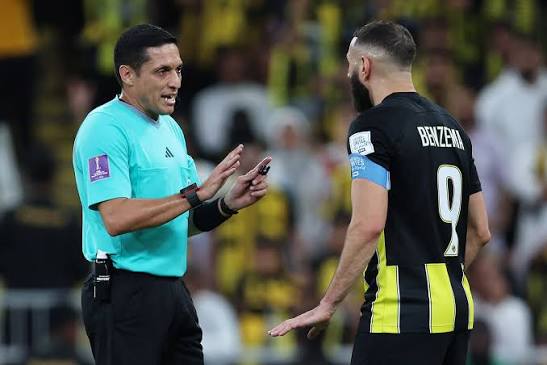
The guidelines can already be adopted by competitions, and under the 2026/27 Laws of the Game they are scheduled to become compulsory for competitions starting on or after 1 July 2027.
It sounds like a straightforward change to football’s disciplinary procedures. In practice, it gives the captain a particularly demanding responsibility.
The difficult part is not asking the question
Under the guidelines, the captain becomes the main point of contact with the referee following major incidents and decisions. Other players are expected to keep their distance, while the captain must approach respectfully and help prevent teammates from surrounding the match officials.
Ordinary interactions between players and referees remain possible. The idea is to manage confrontational situations more effectively.
But consider what the captain must actually do.
First, remain calm when everyone else is frustrated. Then listen to an explanation that may be disappointing. Finally, return to the team and communicate that explanation, possibly to players who strongly disagree.
That requires more than confidence or a loud voice.
It requires emotional control, communication skills and the ability to manage disagreement.
Perhaps the most interesting part is that the captain’s authority comes with a responsibility to listen.
What does this mean for young players?
At youth level, the implications are particularly relevant.
A captain may be the most technically gifted player, the most experienced or simply someone trusted by the coach. But none of these qualities automatically makes someone good at resolving conflict.
Picture two young players arguing after a disputed foul. One captain joins the argument and makes it louder. Another separates the players, asks what happened and helps them refocus.
Both wear the same armband. Their impact on the team is completely different.
During the development of Play, Learn, Lead, this question has also emerged in discussions with coaches and educational staff: how can football help young people understand different responsibilities within a group?
At the project’s meeting in Italy in July 2026, partners explored an important distinction between leading others and accepting different roles. Young people need opportunities to take responsibility, but also to understand when to listen, cooperate or allow someone else to lead.
The IFAB initiative offers a real example of how these skills can be exercised during a match.
Can leadership be taught through a rule?
A coach could use the captain-only principle as the starting point for a training activity.
Give one player the responsibility of representing the team in a disagreement. Ask the others to observe how the situation is handled. Afterwards, discuss what worked, what increased tension and what might have been communicated differently.
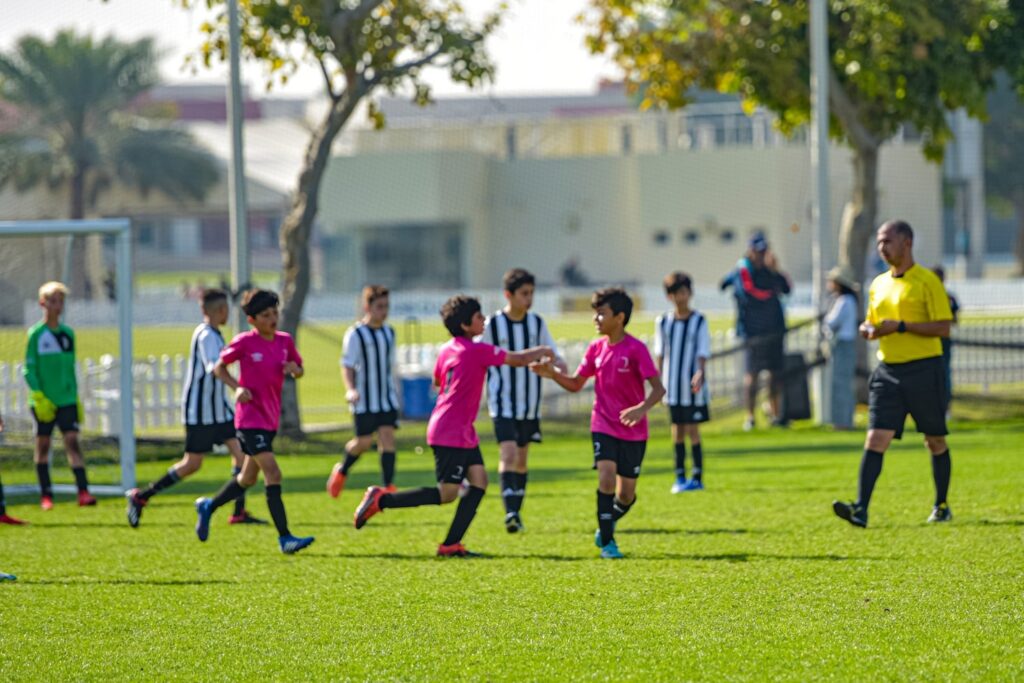
Rotate the responsibility across different players, allowing each to experience the challenge of speaking for a group.
Such an exercise would make leadership something to practise, rather than simply a quality attributed to the team’s best player.
There is also a wider question worth considering. Football is a highly emotional game, and disagreement will always be part of it. The challenge is to express that disagreement without turning every decision into a confrontation.
Changing a rule cannot achieve this on its own. It can, however, create opportunities for different habits to develop.
Perhaps the real test of a captain is what happens in the moments when nobody wants to listen.
Leave a Reply